Ingrid Pui Yee Chu: Congratulations Ellen, on guest curating Art Basel Hong Kong’s Film sector, and Venus, on programming a day of talks for Conversations. Ellen, considering how much your pioneering media work has shaped the art and technology landscape of Hong Kong, has the advent of AI influenced your approach?
Ellen Pau: I’m aware of the changing image culture industry but I’m not focused on AI per se. That said, I may expand my curatorial framing to find works that use AI as a tool to generate moving images, and critical discourses interrogating this process.
IPYC: This would certainly link regional moving image histories to any future AI may have as art.
Venus Lau: The art world’s response to AI is just part of how we connect our thoughts to big data and the tech landscape now – not only for image production, but also for knowledge production. We need to recalibrate what creativity means with new technologies; it’s like when photography appeared and people said, ‘art will die, the aura will disappear.’ As for machines thinking like humans, we still haven’t figured out how consciousness works.
IPYC: Perhaps it is by not totally understanding human consciousness, that imagination can flourish.
EP: If AI becomes a thinking legal entity using language to communicate, it will really redefine art.
IPYC: Venus, your mission at Museum MACAN in Jakarta, where you serve as director is to foster ‘dynamic cross-cultural dialogue and public engagement across Asia’s art scene.’ Will your day-long Conversations program also relay these experiences?
VL: I’m curating three panels on gold as a metaphor for crossing different geographical or cultural demarcations. Gold is self-referential; that’s why it’s been a stable ‘hard currency’ across time, from ancient Egyptian masks to smartphone microchips. Even the liquid indicator bio-tracking the COVID-19 virus in those self-testing kits is colloidal gold. It reminded me: gold is biopolitical, not just financial or geological.
My panelists (including Steph Huang, Shuang Li, Joshua Serafin, Kathleen Ditzig, Herbert Hans, Kandis Williams, and Angela Su) are coming from Hong Kong, Berlin, the Philippines, Belgium, and elsewhere to exchange ideas about horror and fear as social apparatus, and how monstrosity and spectrality affect their work in a turbulent world.
One panel is about how technology – outside AI – is changing the hardware, software, and mentality around art-making. Another talk is about fluidity; from image flux on the internet to actual supply chain ‘flows’. The core is still about art and creativity but discussing cross-border conventions and having cross-cultural conversations will complicate the dominant ‘East-meets-West’ narrative.
IPYC: Will anything change from editions you previously participated in or attended?
EP: It’s an honor to curate the Film Program, but I’m still learning how to connect different institutions, independent spaces, artists, and galleries. I want to bring them together and give them a platform to talk about Hong Kong and Southeast Asian art.
Another aim is to expand the audience base through a program people enjoy, understand, and talk about, including the role of the market in Hong Kong’s art ecology. It benefits those who are making moving images, but also pushes Art Baselto consider new presentation methods – to progress beyond the screen, with a lot of different, more interactive, object-based installations. I’m trying to find good places to show works that expand our views about moving image media. That’s what I want to bring this year.
IPYC: Of course, audiences will come to your screens with their screens. In terms of your setup, have you thought about modes of social engagement and documenting these experiences?
EP: The program should bring knowledge to more people, but I’m happy if visitors produce their own memories and more promotion is good. The public want to have encounters with art, so they take photographs or videos. If they enjoy the arts, they will come back, which is what I want – to make a film program everybody can come and see. There are no tickets. There’s no one taking you to an assigned seat. You can come and enjoy it or walk out if you don’t like it. That’s the perfect scenario for me.
IPYC: To your point, Art Basel has a strong history of working with nonprofits and publications in parts of the fair where visitors can freely engage with contemporary art and programs like Conversations.
VL: I’ve always been a fan of Art Basel Conversations and really appreciate this opportunity to moderate three panels in a row for the first time. Yes, it’s a fair where people come to do business and trade art, but they exchange ideas at the same time.
IPYC: The talks engage the international art community, and the chance to hear people speaking live, having face-to-face conversations offers exciting possibilities for new ideas. Do you collaborate with the artists and galleries in identifying current trends and discussion topics?
VL: When arranging a panel, my interaction with galleries is informal and pragmatic, just like organizing an exhibition or cultural event. Sometimes I think about the sections where individual artists are coming for a project at the fair, or I have a topic, so I deliberately find artists whose practices resonate with that. You try the artist first, then the galleries, but it’s always in flux and the lineups can change.
EP: I like working directly with artists or filmmakers, but working in an Art Basel setting, we also communicate with the galleries, PR agencies, and media. I am happy to announce that this year, Art Basel has planned a special event with KAMS [Korea Arts Management Service] and Art Review to present the Korean artist Ayoung Kim and the collective ikkibawiKrrr in a post-screening discussion.
IPYC: It’s clear these programs extend your work leading multiple non-profits and event-based initiatives, in recording the region’s rapidly developing ‘on-the-go’ art history.
EP: The heart of my work is recording and representing the region’s art history. Every day, we work with a wide range of moving images, and the digital art realm has expanded the film medium in many ways I want to explore.
IPYC: Exactly – you’re tracking a living, breathing sense of where society is going through the moving image.
VL: I considered two aspects when you brought up ‘ecosystems’: one pragmatic, the other being what you described – the bleed between art and different cultural disciplines. After experiencing institutional practices or event-based programming within a growing ecosystem in Greater China, you find out what doesn’t work for community building, and in regions with very different ideas about art.
As for crossovers, my Conversations take art as a vantage point to look at different cultural industries. What shapes our ideas? What are the new forms and patterns in this ecosystem we can interact with and nurture? These are my starting points.
Art Basel Hong Kong takes place from March 27 to 29, 2026. Tickets available here.
Ingrid Pui Yee Chu is a Hong Kong-based curator and writer.
Caption for header image: Art Basel Hong Kong 2025.
Published on February 23, 2026.
Recommended:
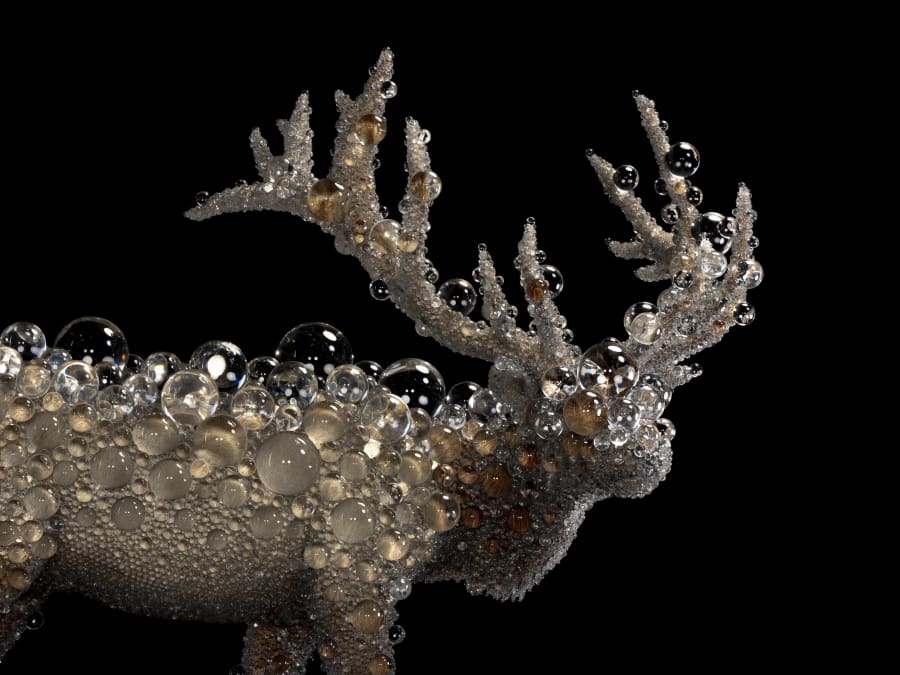
Meet the artist who turns deer into galaxies
From a humble cabbage to the edge of the universe, Kohei Nawa’s practice refracts reality itself
Read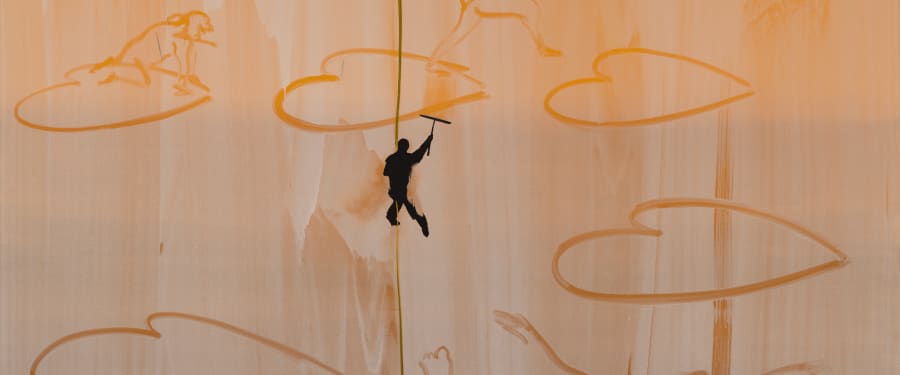
Discover the art behind Art Basel Hong Kong’s 2026 billboards
Featuring works by Bi Rongrong, Chan Wai Lap, and Tala Madani, the campaign spotlights diverse talents from Asia and its diaspora to give a glimpse of the forthcoming show
Discover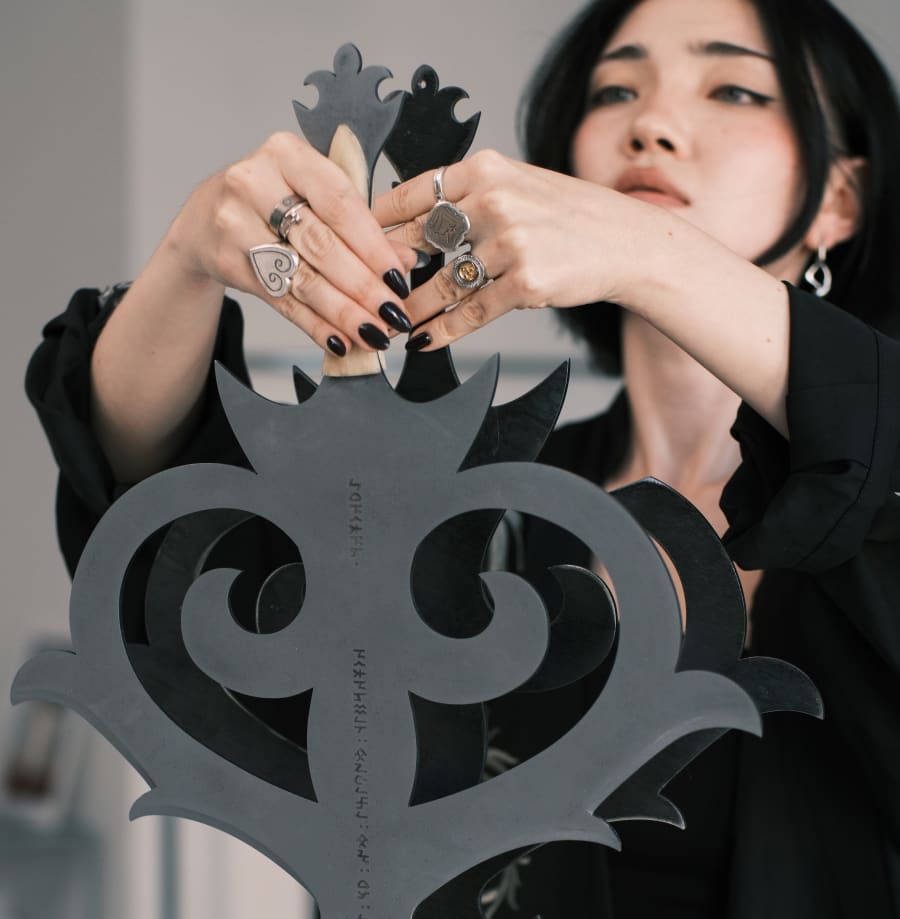
The many facets of feminism in Asian art
From meditative monochromes to iconic warriors, Art Basel Hong Kong’s Insights sector reveals how women artists across Asia have forged feminist vocabularies shaped by local histories
Read