China has its fair share of ambitious museum openings in 2026 and 2027. While some are government-led initiatives designed to elevate the profiles of their host cities – such as the 60,000 sq m Suzhou Museum of Contemporary Art; the 2.4 billion yuan Shenzhen International Art Museum; and the Wu Xi Art Museum, a hybrid project of contemporary and Chinese ink art – others are private ventures backed by the country’s biggest tech companies. Yet, alongside these headline projects, a growing number of private collections and non-commercial galleries are bringing a more grassroots energy to the scene, providing platforms for experimental artists and creating spaces where different disciplines are merging.
In Beijing, this shift is embodied by the collector Niklas Chou and his 69 Art Campus. Housed in a renovated Bauhaus-style office building within the headquarters of his car manufacturing company, Chou seamlessly blends corporate office space and contemporary arts under one roof, where the primary viewers are the hundreds of staff members he employs. The collection stages two exhibitions a year, each organized in collaboration with a guest curator. More than 20 artists are presented across the company’s office complex, turning the workplace into a dispersed exhibition hall. For its current show, ‘Pharmakon’, Chou invited Paul Frèches, curator of the Centre Pompidou x West Bund Museum project in Shanghai, to explore the idea of healing in art – from ancient Chinese traditions to Greek mythology – and the featured artists include Huang Yuxing, Jean Dubuffet, and Melvin Way.
The idea of weaving art into the fabric of daily life finds another champion in the form of the Shanghai-based collector Zhou Chong. His 1690 Art Collection Space occupies a residential house in the historic Huaihai neighborhood of the former French Concession, a deliberate move away from the grandeur of traditional museums. Zhou views these central, intimate venues as the future of the urban art ecosystem, noting that they are not only more sustainable to maintain but far more accessible for the community to engage with spontaneously.
Inside the three-story residence, the collection feels personal rather than institutional. A centerpiece of its long-term display is a work by the Miami-based artist Hernan Bas, which was created specifically for Zhou following the artist’s visit to the space. Beyond his personal holdings, Zhou uses the venue as a bridge between the local and global. By collecting international artists from the Global South as well as emerging Chinese talent, he aims to foster unexpected dialogues that more commercial enterprises might not be at liberty to do.
The landscape of the private foundation in China is increasingly being shaped by a formidable new cohort: female collectors. According to The Art Basel and UBS Survey of Global Collecting 2025, high-net-worth women in Mainland China have emerged as being among the art market’s main patrons. This shift represents more than just financial muscle; these collectors are noticeably moving the needle toward experimental practices and significantly increasing the representation of female artists within the local ecosystem.
A standout among the avant-garde venues being opened includes Cheruby, launched in late 2025 in Shanghai by the collector Cherry Xu. Located in a 1939 heritage building in the Jing’an district, the space functions as a hybrid laboratory for art and fashion and is set to host three residencies annually, with exhibitions that will focus on dismantling the hierarchies between garment and gallery. The inaugural resident was the Mexico City-based artist and designer Bárbara Sánchez-Kane, whose residency ended in November last year, culminating in a show that fuses sculpture, painting, text, and clothes.
An interdisciplinary approach is one more and more young female collectors in China are taking, according to Xu. ‘Many are not only building collections but also supporting experimental artists, founding new platforms, and creating spaces where different disciplines can meet. Women collectors often bring different sensitivities and priorities into the ecosystem,’ she says.
Michelle Yuan Bing’s Eclosion Collection + Projects, meanwhile, offers a different but equally vital form of patronage. Rather than focusing solely on the acquisition of finished objects, for the past few years, it has prioritized the academic and developmental life of the artist. Through initiatives such as artist documentaries and curator residencies, the project offers ‘non-result-oriented’ support – a rare infrastructure that provides artists with the scholarly-interpretation and financial breathing room necessary to experiment.
For her space’s next exhibition, Yuan Bing will present a recent acquisition: The Address Book (1983) by the French artist Sophie Calle, a work that probes questions of privacy and identity. The project began when Calle found a lost address book on a Paris street. After copying its contents and returning it to its owner, she set out to interview the contacts listed inside. By assembling fragments of testimony from the owner’s friends and colleagues, Calle constructed an intimate – and unsettling – portrait of a man she had never met.
While some collectors are embedding art into offices and homes, others are moving away from the idea of a fixed physical presence altogether. For these collectors, the mission is not to build a monument but to act as a nomadic catalyst for the avant-garde.
The Soil Collection, founded by Vince Guo and Aria Yang (who also serves as the program director for Gallery Weekend Beijing), embodies this nomadic approach. Eschewing a permanent gallery, the collection stages major survey exhibitions every two years in rotating locations. The duo’s core objective is to provide a platform for projects that might otherwise struggle in the commercial sector due to their experimental nature or lack of immediate marketability.
In 2024, as China emerged from its extended pandemic restrictions, the collection launched a poignant group exhibition centered on the theme of identity displacement. The show featured global heavyweights alongside local voices, with a roster that included Sin Wai Kin, Philippe Parreno and Zhang Yibei, and deliberately avoided the ‘greatest hits’ format, instead showcasing lesser-known works by these household names.
In Guangzhou, the Last Piece Collection has rapidly emerged as a vital force in the regional art scene, driven by the vision of the former advertising veteran Coobe Wang and his wife, Sophia Luo. Their approach is defined by a bold commitment to newer media, focusing on multimedia installations and often demanding works. The collection features work by international heavyweights, including the sociopolitical interventions of Francis Alÿs and the kinetic, atmospheric explorations of Julius von Bismarck.
The couple’s dedication to edgier aesthetics extends into their personal living space, which they have transformed into a domestic exhibition site for even their most unsettling acquisitions. These include eerie installations by artists such as Gabriel Rico and Daniel Firman. The pair were also instrumental in bringing the Guangdong Times Museum back to life. Through major exhibitions at both the museum and Guangzhou’s Shangrong Gallery, the founders have brought their brand of niche experimentalism to a wider audience.
Nonetheless, cultural patronage remains a delicate balancing act. Many younger collectors are eager to support the artists they admire through commissions and exhibitions, yet amid a broader economic slowdown – and a shift in mindset from the previous generation – they are often reluctant to take on the public responsibilities of running an institution and the compromises that may come with it.
This trend is exemplified by the PTSD Collection, founded by Sebastian Liang and Thomas Jiang. They began collecting in 2013 and have since assembled a collection of about 600 works, with a notable focus on LGBTQ artists. Although the collection has never been publicly exhibited, it has consistently supported initiatives that expand the visibility of contemporary art from the Global South. These include the Chinese Queer Collection at Leiden University in the Netherlands and the UK-based International Visual Arts Exchange (IVAE), a laboratory dedicated to experimenting with curatorial strategies and new forms of artistic exchange across cultures.
The private collections and foundations highlighted here represent only a fraction of a rapidly diversifying ecosystem. As the art world pivots toward the Global South, China’s own cultural landscape is decentralizing, shifting its gaze beyond the traditional pillars of Beijing and Shanghai toward a new frontier of collector-led initiatives in emerging cities.
While the final form of this evolution remains to be seen, one thing is certain: the landscape is expanding, and the boundaries of where – and how – art lives are being redrawn.
Cheung Hok Hang is a journalist specializing in arts and culture, with bylines in the South China Morning Post, Nikkei Asia, and other art publications.
Caption for header image: Hong Kong, 2023. Photograph by Luke Casey for Art Basel.
Recommended:
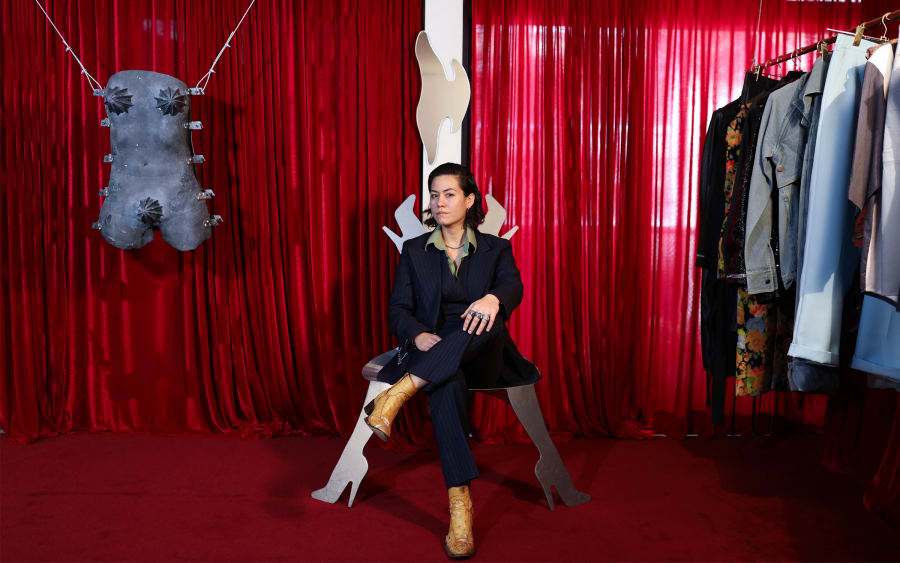
This fashion wunderkind wants you to question your relationship to clothing
Bárbara Sánchez-Kane is snubbing the runway to forge her own path
Read
7 trends shaping the global art market’s recalibration
The Art Basel and UBS Global Art Market Report 2026 is out – here is what you need to know
Read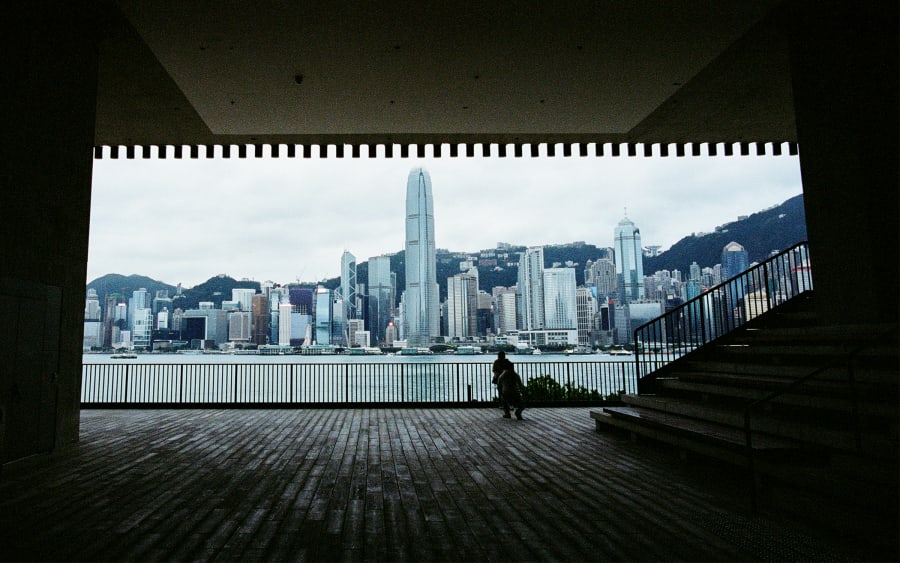
A new map of the Asian art market is emerging
Singapore, Japan, and Thailand are gaining momentum, but Hong Kong continues to dominate the region’s high-end trade
Read